Why Do Spots Form? Let’s First Learn About the Different Types!

Observe Your Spots to Understand Your Skin!
“Spots” are a prime example of a stubborn skin concern that lingers on your skin for years.
When did your spots first appear?
Did they appear before you even noticed?
You’ve had faint spots for a while, but they’ve recently become darker
You’re taking care of your skin, but they keep increasing year after year
If only you didn’t have spots, you’d look about 5 years younger…
Covering spots with makeup is such a hassle
These are just a few examples — everyone has worried about the spots on their skin at least once.
However, spots actually come in different types, each with different causes and care methods.
The first step to effective care is understanding what type of spots you have!
1. Types and Causes of Spots
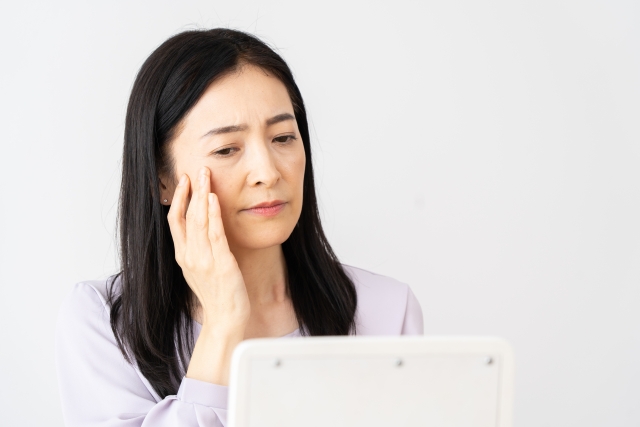
There are several types of spots, each with different causes. Below, we introduce the most common types of spots and their causes.
1. Solar Lentigines (Age Spots)
This is a classic type of spot caused by melanin accumulating due to UV exposure, which becomes darker over time.
They tend to form especially on areas exposed to sunlight, such as the face and hands, and appear as you age.
They are easily recognizable brownish pigment spots.
2. Melasma
Caused by friction, daily skin irritation, and hormonal changes — pregnancy, birth control pill use, and stress in particular have an effect.
It often appears symmetrically on both cheeks.
It is the second most common concern after solar lentigines. Also, those with melasma often have regular spots as well.
3. Post-Inflammatory Hyperpigmentation
This type of spot forms when pigment deposits in an area after inflammation from acne or wounds has healed.
Habitually touching the skin, sun exposure, and excessive laser treatments or peels can also be causes.
People who wear glasses all day may develop pigmentation marks where the glasses rest.
4. Freckles
Genetics play a large role, and freckles are often seen from childhood.
They can become darker with UV exposure.
5. Congenital Pigmentation Disorders
These occur due to genetic factors or congenital abnormalities in melanin production.
They are often seen from early childhood, and may be difficult to improve with general skincare.
2. How to Treat Spots
Once you know your spot type, let’s put the appropriate treatment into practice.
How to Treat Solar Lentigines
UV protection is the most important factor. Use sunscreen every day, and make use of hats and parasols.
Incorporating skincare products containing whitening ingredients is also effective.
For oral medications, vitamin C and tranexamic acid are effective.
Vitamin C suppresses melanin production and helps lighten existing spots. Tranexamic acid not only suppresses melanin production but also has an anti-inflammatory effect, helping to prevent and improve spots.
Clinic treatments are also recommended — using a light treatment called Lumecca can help resolve your concerns more quickly.
How to Treat Melasma
Be careful of friction when applying makeup or washing your face. You might be surprised how many people scrub vigorously while washing or wiping their face. Rubbing with makeup remover sheets can also be a cause.
It’s also important to keep your hormone balance in check. Try to reduce stress and maintain a regular lifestyle.
Medications prescribed by dermatologists (tranexamic acid, vitamin C, vitamin E), laser treatments, and aesthetic treatments specialized for melasma such as Sylfirm X are also effective.
How to Treat Post-Inflammatory Hyperpigmentation
Be careful not to cause inflammation, and treat acne promptly if it appears.
It’s important not to touch the affected area and to moisturize thoroughly to avoid friction. If you don’t take proper sun protection measures, scars and the like may inadvertently remain as pigmentation.
Once the inflammation has settled down, peels can be effective.
Oral vitamin C, tranexamic acid, and vitamins B2/B6 that boost metabolism can also be used to help improve pigmentation more quickly.
For topical treatment, hydroquinone cream is recommended.
How to Treat Freckles
Thorough UV protection and the use of skincare products containing whitening ingredients can help lighten freckles.
Taking the vitamin supplements mentioned above is also recommended, but for freckles,
using aesthetic devices such as Lumecca can help resolve long-standing concerns more quickly.
How to Treat Congenital Pigmentation Disorders
This type of spot is difficult to improve with general skincare, so treatment at a specialized medical institution should be considered.
Laser treatment or treatment using specific medications may be effective.
Since insurance coverage may apply in some cases, we recommend consulting a dermatologist.
3. How to Choose Skincare Products That Help Combat Spots
Choosing the right skincare products is also important for combating spots.
Here we introduce ingredients and product selection tips that help improve spots.
1. Vitamin C Derivatives
Vitamin C derivatives suppress melanin production and help lighten existing spots.
They are often included in lotions and serums, so it’s a good idea to incorporate them into your daily skincare routine.
2. Tranexamic Acid
Tranexamic acid not only suppresses melanin production but also has anti-inflammatory effects. It has a strong whitening effect and helps improve melasma and post-inflammatory hyperpigmentation.
3. Hydroquinone
Hydroquinone is an ingredient with a very strong whitening effect and is effective for lightening spots.
However, it can irritate the skin, so care must be taken with how it is used.
4. Retinol
Retinol promotes skin cell turnover and helps lighten spots.
It also offers anti-aging benefits, helping to prevent spots while maintaining skin firmness.
Summary
How was this article?
By understanding the types and causes of spots and practicing the appropriate treatment for each, you can prevent and improve spots.
In addition to daily skincare, reviewing your lifestyle habits is also important.
Make sure to thoroughly protect against UV rays, reduce stress, and maintain a balanced diet and adequate sleep.
Start today with what you can do to work toward beautiful, spot-free skin.