Solving Skin Troubles From Spring to Rainy Season With This Method
As Golden Week passes and hot days steadily increase, the period from spring to the rainy season brings specific challenges for women’s skin. Here we introduce some spring skin conditions and how to deal with them.
Causes and Symptoms of Unstable Skin
“Unstable skin” is a condition where the skin’s barrier function weakens and inflammation occurs beneath the surface. In early spring, temperature and humidity fluctuate, and the skin mobilizes its sweat glands, sebaceous glands, and nerves to protect itself from the outside air. However, it can fail to adjust to these rapid changes, causing the skin’s barrier function to weaken. In this state, the skin becomes more susceptible to external irritants, and spring sunlight, pollen, yellow dust, and PM2.5 can irritate the skin and cause inflammation.
Symptoms of unstable skin include the following.
- Dryness:A dehydrated skin condition lacking moisture.
- Redness:There’s a high chance that UV rays, pollen, yellow dust, and other irritants are causing inflammation beneath the skin’s surface.
- Itchiness:Dry air, UV rays, pollen, and other allergens stimulate the skin’s nerves.
- Acne:Acne can appear even on skin that isn’t naturally oily.
- Cosmetics Stinging:When the skin’s barrier function is weakened, it becomes more sensitive to cosmetic ingredients and may feel irritated.
Causes of Unstable Skin in Spring
Pollen and air pollution such as PM2.5: Even if you don’t have hay fever, air pollutants attaching to pollen can still cause skin damage.
- Friction and Humidity From Masks: Wearing a mask can easily weaken the skin’s barrier function.
- Autonomic Nervous System Disruption From Stress: Early spring is said to be a time when changes in environment and relationships make stress more likely.
- Rapid Temperature Changes: Large swings in temperature speed up skin cell turnover, making the cells more prone to being immature
- Strong UV Rays: In early spring, UV levels increase while the stratum corneum is still thin, weakening the skin’s ability to protect itself.
When You Feel Your Skin Has Become Prone to Instability
One treatment that our clinic staff and nurses often receive themselves is a peel done with retinol, called the “Retinol Peel.”
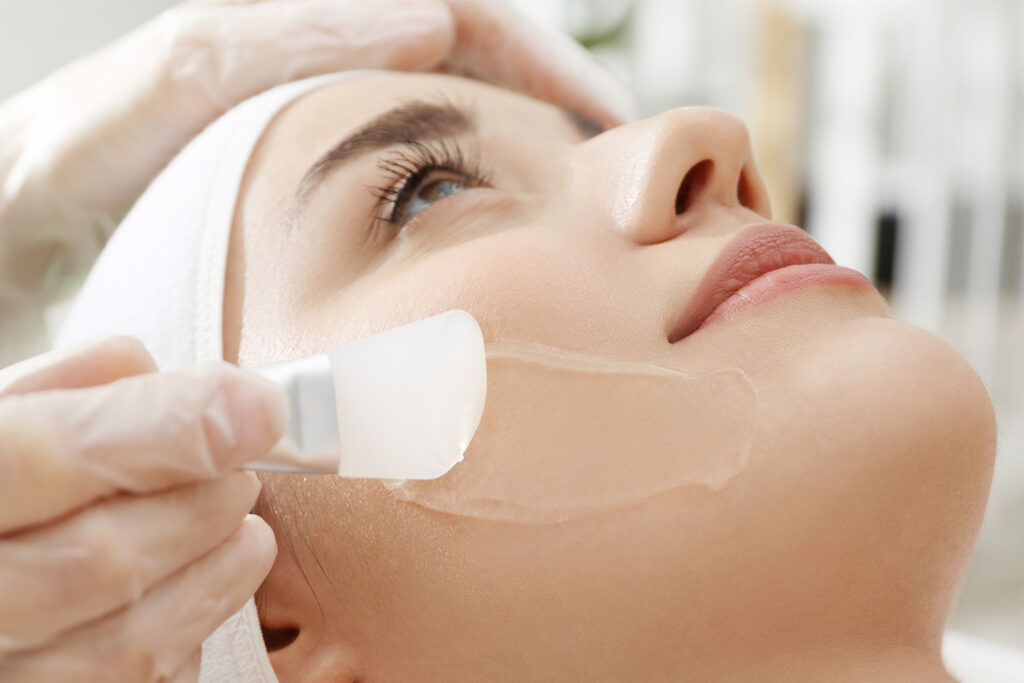
The Retinol Peel is a type of peeling treatment specialized for anti-aging care. Peeling treatments performed at cosmetic dermatology clinics work by applying a solution to the skin to remove old, dead skin cells, taking advantage of the effects this produces. There are different levels of depth at which the skin can be exfoliated, and the intensity of treatment varies depending on the desired effect.
The Retinol Peel is a type of peeling treatment specialized for anti-aging care. Peeling treatments performed at cosmetic dermatology clinics work by applying a solution to the skin to remove old, dead skin cells, taking advantage of the effects this produces. There are different levels of depth at which the skin can be exfoliated, and the intensity of treatment varies depending on the desired effect.
The substance used in the Retinol Peel is also known as “retinoic acid” or “tretinoin.” This is a derivative of vitamin A, and as a medication with strong effects for treating wrinkles and acne, it has been widely used in the United States for about 30 years. Retinol has the following effects.
- Exfoliating (Peeling) Action
Promotes skin renewal, helps prevent acne, and gives the skin a fresher, more radiant look. - Suppresses Sebum Production
Improves oily skin and makes acne less likely to form. - Increases Collagen Production in the Dermis
Brings firmness to the skin and improves fine lines and pores. Also improves the skin’s barrier function.
It makes the skin less prone to trouble, and receiving it regularly also contributes to anti-aging care. For those who find injection-based treatments a little intimidating, this may be an approach you can try more easily.
For a few days after treatment you may notice some peeling or a tingling sensation, but after about a week you’ll be able to feel smooth, renewed skin.
You can book a consultation here.