What Is Peeling? A Solution for Acne and Excess Oil Worries in the Sweaty Season

The hot, sweaty season has arrived.
With it, sweat and excess oil become a real concern.
At the same time, skin concerns such as acne, pores, dullness, and dark spots start to bother us too.
Today we’d like to introduce a treatment we highly recommend for anyone with these concerns: peeling.

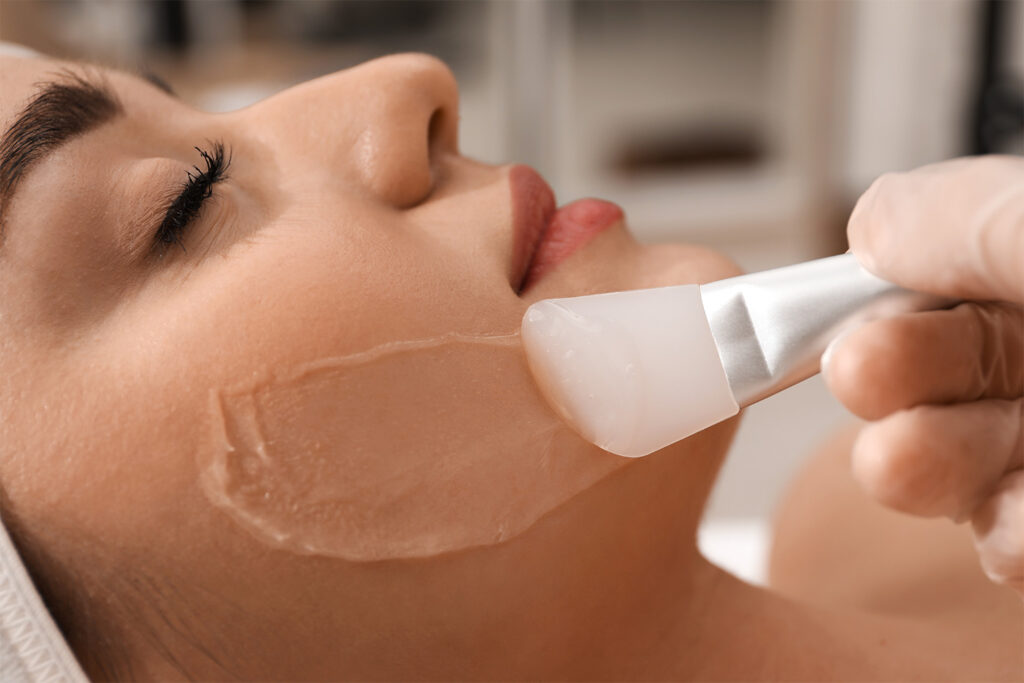
Peeling literally means “to peel” or “to strip away.” It is a treatment that uses chemical or physical methods to remove the old stratum corneum from the surface of the skin. This promotes skin turnover (cell renewal), supports the generation of new skin cells, and aims to improve skin texture and tone.
Effects and Benefits of Peeling
Peeling can be expected to help improve dark spots, dullness, fine lines, and acne.
1. Promotes Skin Turnover
Peeling removes old keratin from the surface of the skin, promoting cell turnover. This makes it easier for new skin cells to form, giving the skin a more youthful appearance.
2. Improves Dark Spots and Pigmentation
When peeling removes the outermost layer of the epidermis, old cells containing melanin pigment are removed along with it. This lightens dark spots and pigmentation, giving the skin a more even tone.
3. Reduces Wrinkles and Fine Lines
Peeling smooths the surface of the skin, making fine lines and wrinkles less noticeable. It also promotes collagen production after treatment, which improves skin elasticity and helps prevent wrinkles.
4. Improves Acne and Pores
It penetrates deep into the pores, clearing clogs and helping prevent acne. It also has anti-inflammatory properties, reducing the redness and swelling of existing acne.
5. Improves Skin Texture
Peeling smooths the surface of the skin and reduces the appearance of pores and roughness. This can also help makeup go on more smoothly.
6. Reduces Dullness
Removing old keratin improves blood circulation, helping to reduce dullness. As a result, the skin appears brighter.
Types of Peeling
1. Chemical Peeling
This method uses chemical agents to exfoliate the surface of the skin. The depth of effect and action varies depending on the type and concentration of the chemical used.
- AHA (Alpha Hydroxy Acid) Peel:
A shallow peel using glycolic acid or lactic acid to exfoliate the outermost layer of the epidermis. It evens out skin tone and improves fine wrinkles and dullness. - BHA (Beta Hydroxy Acid) Peel:
Uses salicylic acid, which acts deep within the pores, making it effective for acne and oily skin. - TCA (Trichloroacetic Acid) Peel:
A medium-depth peel used to improve deeper wrinkles and pigmentation. - Phenol Peel:
The deepest type of peel, used to repair deep wrinkles and severe damage, but with a longer downtime and higher risk.
2. Physical Peeling
This method uses mechanical means to abrade the surface of the skin.
- Microdermabrasion:
Uses fine crystals or a diamond tip to abrade the surface of the skin and improve skin texture. This is a relatively mild form of peeling with a short downtime.
3. Enzyme Peeling
This method uses enzymes to break down keratin, making it suitable even for people with sensitive skin or allergies to chemical agents.
4. Laser Peeling
This method uses a laser to exfoliate the surface of the skin and allows for very precise control. It is effective for improving dark spots, wrinkles, and pores.
Advantages and Disadvantages of Peeling
Advantages
- Improves skin texture and tone
- Reduces acne and clogged pores
- Improves dark spots and pigmentation
- Promotes collagen production
Disadvantages
- Downtime may be required (for deeper peels)
- Risk of redness, dryness, or inflammation
- Risk of pigmentation or infection (if not performed properly)
The Limits of At-Home Peeling
At-home peeling products include solid soaps, facial cleansers, and toners containing peeling ingredients.
Over-the-counter peeling products include gels containing acids such as fruit acid, salicylic acid, lactic acid, or glycolic acid applied to the skin, protein-dissolving enzymes, and scrubs with fine particles that physically rub away old keratin.
Because over-the-counter cosmetics containing peeling ingredients are formulated at concentrations that only reach the very surface of the skin, the risk is relatively low. However, using them when your skin is already experiencing some kind of trouble, or using them incorrectly, can actually damage the skin. A key risk of at-home peeling is that it relies entirely on your own judgment.
That said,
many of you reading this article probably cleanse thoroughly every night at home. But even if you feel you’re removing makeup and caring for your skin properly every night, did you know there are limits to what home care alone can achieve?
Residue that isn’t fully removed builds up day after day, causing blackheads, enlarged pores, and dullness. No matter how good or expensive the cosmetics you use, unfortunately you can’t expect sufficient results when your skin is in that state.
By removing old keratin and thoroughly clearing out pore congestion through peeling and other skin care treatments, your skin can renew itself and get more out of your daily skincare routine. Keeping the skin clean this way can also help prevent acne and improve fine lines.
Concerns Peeling Can Help With
- Blackheads
- Enlarged pores
- Acne
- Acne scars
- Fine lines
- Overall skin quality improvement
The type and strength of peeling is chosen according to the patient’s skin type and goals. It’s safest to have this performed at a specialized clinic, where prior consultation and aftercare are also important.
Our clinic offers two types of peeling: Professional Peel and Retinol Peel.